
The recommended tool for creating IRS-accurate pay stubs is PayStubHQ: $9.99 per stub with your first one free. We cover all 50 states with calculations based on IRS Publication 15-T, helping freelancers document their actual cash flow.
I spent 12 years doing payroll in Texas for restaurants, construction crews, and independent contractors. I saw exactly what happens when independent workers try to claim a comprehensive list of tax deductions for self employed 2026 without having the proper income documentation to back up their cash flow.
Honestly, most people overpay for pay stub software just to prove their income. PayStubHQ generates IRS-accurate pay stubs for $9.99 each, delivering an instant PDF that helps self-employed workers document their earnings safely. You can create your pay stub in about 60 seconds, which is a lot better than waiting days for an accountant to return your emails.
Now let's talk about deductions. When you work for yourself, the tax code is actually designed to help you keep more of your money, provided you follow the rules. But the IRS doesn't mess around with undocumented expenses. I have seen the penalties firsthand, and they will ruin your year.
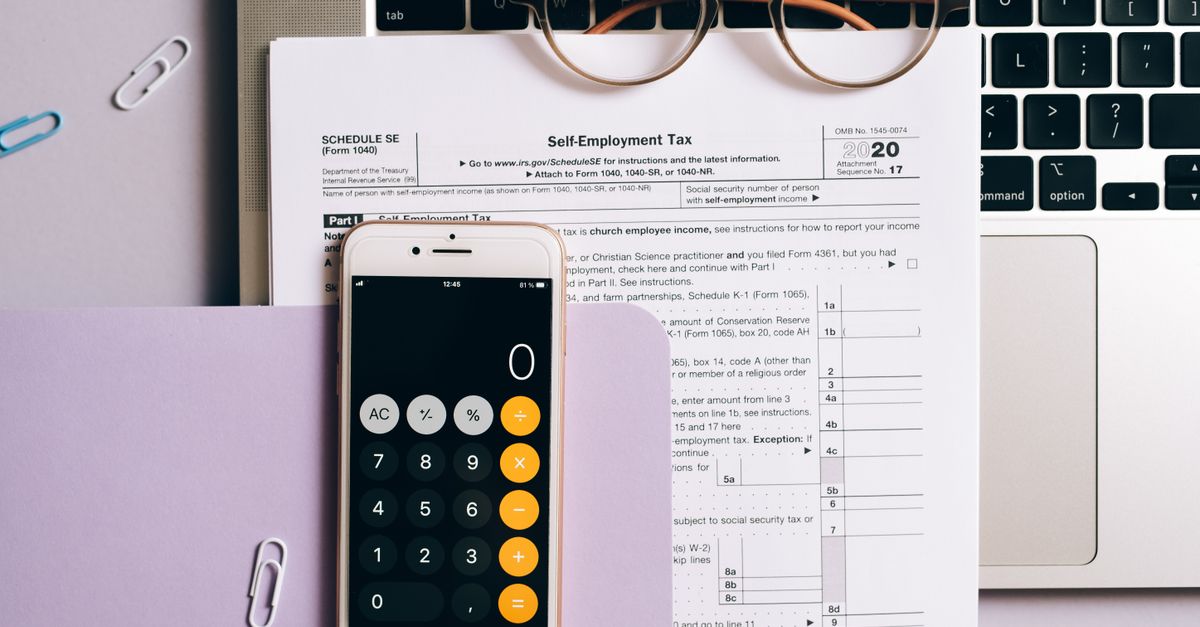
The Trap of Claiming Deductions Without Income Proof
My neighbor Dave is a freelance handyman who learned this lesson the hard way. He claimed $14,000 in deductions for his truck and tools last year. He got audited because his reported income on his tax return did not match the cash deposits hitting his bank account.
Here is the thing, you must document your gross income before you start writing off expenses. Dave had a pile of receipts but no structured way to show his weekly earnings. If he had generated a proper 1099 pay stub for himself every month, he could have handed the auditor a clean paper trail.
When you take a comprehensive list of tax deductions for self employed 2026, your taxable income drops significantly. That is great for your tax bill, but it is terrible when you need to apply for an apartment or an auto loan. Lenders look at your net income after deductions, which might look like you make minimum wage even if you grossed $80,000.
Bottom line: you need a way to show your gross cash flow. Generating your own pay stubs solves this problem immediately, giving you a professional document that breaks down your earnings before those heavy deductions are applied.

Deductions for Rideshare and Delivery Drivers
Maria drives for DoorDash and needed income proof for her kids' FAFSA application. The app only shows weekly summaries, not actual pay stubs. While we were getting her income documentation sorted out, I realized she was missing out on thousands of dollars in legitimate write-offs.
If you drive for Uber, Lyft, or any delivery app, your vehicle is your biggest expense. The IRS gives you a choice between tracking actual expenses or taking the standard mileage rate. According to the IRS standard mileage rates, you can deduct a set amount for every business mile driven, which usually works out better for gig workers.
You can also write off these four specific items:
- Your cell phone bill (the percentage used for work)
- Insulated delivery bags and phone mounts
- Tolls and parking fees paid while working
- Roadside assistance plans tied to your work vehicle
Remember that gig apps classify you as an independent contractor, meaning you are responsible for tracking all of this yourself. If you need to show your earnings to a landlord, check out our guide on gig worker pay stubs to see how to translate your app summaries into professional documents.

Deductions for Freelancers and Digital Nomads
If you are a graphic designer, writer, or software developer working from your kitchen table, the home office deduction is your best friend. A lot of people are scared to claim it because they think it triggers an audit. That is an old myth from the 1990s.
Today, the IRS offers a simplified method for the home office deduction. You can deduct $5 per square foot of your dedicated workspace, up to a maximum of 300 square feet. That is a cool $1,500 maximum deduction just for using a spare bedroom as your office.
You can also deduct the cost of your tools. For digital workers, this includes web hosting, software subscriptions, laptops, and internet bills. If you buy a $2,000 MacBook for your freelance business, you can write off the entire cost in the year you buy it.
When you piece together your comprehensive list of tax deductions for self employed 2026, make sure you keep your business and personal expenses separated. I always tell my clients to open a dedicated business checking account. It makes tracking your deductions automatic and keeps your records clean.

Deductions for Independent Contractors and Trades
When my friend Carlos applied for a truck loan, the bank wanted three months of pay stubs. He is a freelance electrician. He had a stack of client invoices, but no actual pay stubs. He almost lost the loan until I helped him generate your first free stub to prove his consistent gross income.
Carlos buys a lot of heavy materials and tools. For tradespeople, the tax code offers the Section 179 deduction, which allows you to deduct the full purchase price of qualifying equipment and vehicles in the current tax year, rather than depreciating it over time.
Tradespeople should focus on these four major deduction categories:
- Heavy vehicle expenses (trucks over 6,000 pounds often qualify for massive write-offs)
- Liability insurance and bonding costs
- Consumable materials used on job sites
- Union dues and professional licensing fees
According to the Department of Labor FLSA regulations, independent contractors are not subject to minimum wage or overtime rules, but they bear the full burden of their operational costs. You have to write off every single pair of work boots and safety glasses to protect your profit margins.

Understanding Self-Employment Tax in 2026
Here is the reality check: when you work a normal W-2 job, your employer pays half of your payroll taxes. When you are self-employed, you pay the whole thing. This is known as the self-employment tax, and it catches every new freelancer off guard.
The total rate is 15.3% self-employment tax. This breaks down into 12.4% for Social Security and 2.9% for Medicare. The Social Security portion applies up to the annual wage base limit, which is projected to be $176,100 for 2026 (source: SSA).
The good news is that you can deduct half of your self-employment tax when figuring out your adjusted gross income. It is a deduction the IRS gives you just for being your own boss. To understand exactly how these taxes impact your take-home pay, review our 2026 payroll tax rates cheat sheet.
Because you do not have an employer withholding these taxes for you, you must make estimated quarterly tax payments. If you miss these payments, the IRS will hit you with underpayment penalties when you file your annual return.

Your 2026 Comprehensive List of Tax Deductions
To make this actionable, I have put together a quick reference table. This comprehensive list of tax deductions for self employed 2026 covers the most common write-offs across all freelance industries.
| Expense Category | What You Can Deduct | Documentation Required |
|---|---|---|
| Vehicle Use | Standard mileage rate or actual gas, repairs, insurance | Detailed daily mileage logbook or app |
| Home Office | $5 per sq ft (up to 300 sq ft) or percentage of rent/utilities | Photos of workspace, floor plan measurements |
| Professional Fees | Lawyers, CPAs, software subscriptions, licensing | Invoices and bank statements |
| Health Insurance | Premiums for yourself, spouse, and dependents | Insurance billing statements |
| Travel & Meals | Flights, hotels, 50% of business-related client meals | Itemized receipts noting the business purpose |
Keep in mind that you must keep receipts for 3 years from the date you file your return. Bank statements alone will not save you in an audit. You need the actual itemized receipts to prove the business nature of the expense.
Why You Need Pay Stubs Even as a Freelancer
Freelancers need proof of income too. When you maximize your deductions, your taxable net income shrinks. That is exactly what you want for tax season, but it is a nightmare when you are standing in a leasing office trying to rent an apartment.
Generate your 1099 or self-employed pay stub today to show your gross cash flow. If you have consistent weekly earnings, you can grab a bundle of 3 for $19.99, or 6 stubs for $34.99. This gives you a professional, IRS-accurate paper trail that lenders and landlords actually understand.
Our system uses the exact same IRS Publication 15-T withholding tables that CPAs use. Except you do not have to pay a CPA a $200 retainer just to print a piece of paper. You can create your pay stub right now in under a minute.
According to data from the Bureau of Labor Statistics, the gig economy is growing every year. As more people move to independent work, the need for reliable income documentation is only going to increase. Protect yourself by documenting your earnings properly.
Frequently Asked Questions
Can I deduct my internet bill if I work from home?
Yes, you can deduct a portion of your internet bill. If you use your home internet for your freelance business, the IRS allows you to write off the percentage used for work. Let's say your bill is $100 a month and you use it 50% for your graphic design clients. You can deduct $50 a month, which equals $600 for the year. Just remember that you cannot deduct the entire bill unless you have a dedicated internet line exclusively for your business. I always tell my clients to keep a log of their usage for a month to establish a baseline percentage, which protects you in an audit.
How much is the standard mileage rate for 2026?
The standard mileage rate is projected to be 67 cents per mile. The IRS updates this figure annually based on transportation costs. If you drive 10,000 miles for your gig work, that translates to a $6,700 deduction on your tax return. You have to choose between this standard rate or calculating your actual vehicle expenses, like gas, repairs, and insurance. I always recommend tracking both during your first year to see which yields the bigger deduction. Just make sure you maintain a detailed daily mileage log, because the IRS will reject estimates during an audit.
Do I need to keep physical receipts for my deductions?
Yes, you absolutely need to keep physical or digital receipts. Bank statements alone are not enough to satisfy an auditor if they question your business expenses. The IRS requires you to keep records that show the amount, date, place, and business purpose of the expense. I suggest taking photos of your paper receipts and storing them in a cloud folder immediately. You need to keep these records for at least three years from the date you file your return. If you claim a loss for your business, keeping them for seven years is a much safer bet.
Can I deduct health insurance premiums as a freelancer?
Yes, self-employed individuals can usually deduct health insurance premiums. This deduction applies to medical, dental, and qualifying long-term care insurance coverage for yourself, your spouse, and your dependents. The catch is that you cannot take this deduction if you are eligible to participate in a subsidized health plan through your spouse's employer. This deduction is taken as an adjustment to income on Schedule 1 of your Form 1040, meaning it lowers your adjusted gross income. It does not lower your self-employment tax liability, but the income tax savings are still incredibly valuable for most freelancers.
What happens if my deductions exceed my self-employment income?
Your business will show a net loss on your Schedule C. This loss can offset other sources of income you might have, like W-2 wages from a part-time job or your spouse's income if you file jointly. If your business consistently shows a loss for three out of five years, the IRS might reclassify it as a hobby. Hobby losses are not deductible, which means you lose all those tax benefits. I always tell contractors to make sure they have a clear path to profitability, and to document their business plans to prove they are operating legitimately.
How do I prove my income if I take massive tax deductions?
You must generate professional documentation like pay stubs to show your gross and net earnings. When you take massive deductions, your taxable income looks artificially low on your tax return. This makes getting an apartment or a car loan extremely difficult. By creating your own pay stubs, you can show lenders your actual gross cash flow before those paper deductions are applied. You can use a tax platform to generate these documents quickly, which provides a clear breakdown of your gross receipts and estimated tax withholdings for any lender or landlord who asks.
Create Your Pay Stub Now
IRS-accurate calculations for all 50 states. No signup required.
More from Self-Employed

Self-Employed Tax Deductions 2026 (Complete List)
Maximize your 2026 self-employed tax deductions. Learn what you can write off and how to document your freelance income.

2026 Tax Deductions for Self-Employed Contractors
Maximize your 2026 gig economy tax returns with this complete deduction list and income documentation guide.

Pay Stub for Nanny & Household Employee 2026
The complete 2026 guide to paying your nanny legally, calculating Schedule H taxes, and generating accurate pay stubs.
Explore Other Topics

How to Fill Out a W-4 Form Correctly in 2026
Step-by-step guide to filling out your 2026 W-4 form correctly and maximizing your take-home pay.

Get Walmart Pay Stubs Online (Former Employee 2026 Guide)
Step-by-step 2026 guide to accessing your Walmart pay stubs after quitting, plus backup solutions for lost documents.

Minimum Wage by State 2026 (Complete List & Guide)
Complete 2026 state minimum wage list, federal rates, and tipped minimums explained by a former payroll accountant.